



Tania Angeloff: I am a sociologist working at the intersection of gender, work and the environment. I have also spent many years researching contemporary Chinese society.
I hold a PhD in sociology and am authorised to supervise doctoral theses (HDR); I am a graduate of Sciences Po Paris and the Institute of Oriental Languages. I am currently a Professor of Sociology at the University of Paris 1–Panthéon-Sorbonne (at the Sorbonne Institute for Development), a researcher at the UMR ‘Development and Societies’ (a joint research unit between Paris 1 and the IRD) and an associate researcher at the Maurice Halbwachs Centre (ENS-EHESS), where I was on secondment from the CNRS in 2024–2025. My research has long focused on gender and the labour market in France, Europe and China, as well as on gender issues in development. I have been a member of the Labour Market and Gender (MAGE) network since 1995 and have served on the editorial board of the journal Travail, genre et sociétés since 2001.

Jardin des MétamorphOzes
photo credit Tania Angeloff 2024
I have recently turned my attention to a new area of research, at the intersection of socio-anthropology of gender, work and environmental care. Drawing on a study of the work of researchers, gardeners and horticulturists in botanical gardens across Europe, Costa Rica and South-East Asia, I analyse the shifting patterns of territorial inequalities and the new opportunities arising from environmental transition policies against a backdrop of accelerating climate change. My research examines the creation of gardens from the perspective of designers, gardeners and their clients (local and international elites), as well as how these gardens are received by visitors. This is a qualitative study that draws on the tools of visual anthropology, adopting a comparative perspective across three continents (Europe, Asia and Latin America).
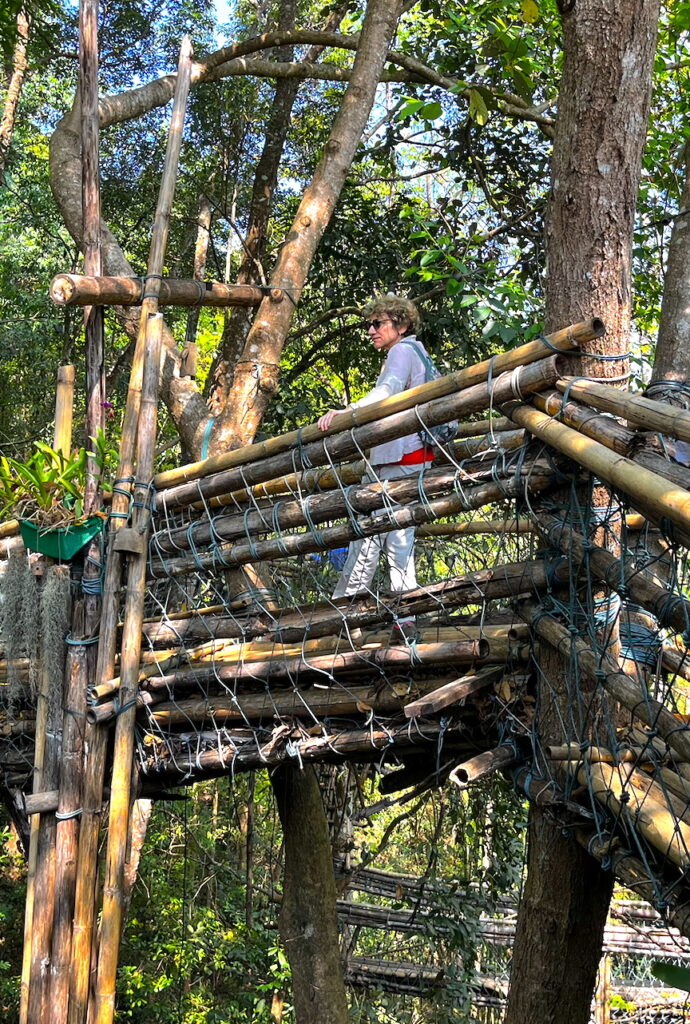
Furthermore, in 2026, I will be starting an ANRS collaborative project (led by Chiang Mai University and the University of Cergy) entitled CHEZAP-SEA, which focuses on the co-development of heritage-sensitive approaches to preventing the emergence of zoonoses in South-East Asia. This project aims to explore the integration of everyday environmental heritage into One Health strategies for the prevention of zoonotic respiratory infections in Laos and Thailand.